

Après la pluie, la boue: Transforming an Ancestral Material into the Language of a Reimagined Future
“Earth architecture must remain subversive, disobedient, and idealistic. It can only achieve this by being realistic, pragmatic, and empathetic towards society and the state of the world.”1 Ariane Wilson, architect and historian
Mud is the inevitable outcome of the contact between earth and water, two of the most symbolically charged elements representing life. It holds a central place in many mythical and biblical creation stories, in which clay is the original material used to make various creatures including humans2. In the exhibition Après la pluie, la boue, Christopher Varady-Szabo utilizes it in literal and metaphorical ways to talk about our humanity through an exploration he has been pursuing for decades, raising awareness of the fragility of our ecosystems and the beauty of the living world.
Originally from Sydney, Australia, Varady-Szabo draws on the nature of the Gaspé Peninsula, where he has lived for over forty years, as a defining source of inspiration. In 2022, he participated in a three-month research-creation residency at Fonderie Darling, an experience marked by the constant noises of the city, the perpetual presence of construction sites, and the farness of green spaces. The tension between the industrial atmosphere of the residency and the decidedly organic nature of Varady-Szabo’s art practice provided a fertile terrain from which to imagine an exhibition project. Four years later, he occupies a site shaped by a working-class and extractivist history, in which man and material have long confronted each other in accordance with a naturalist cosmology, which presupposes a nature that must be exploited and that is distinct from our own bodies. He introduces sculptural works into the space that draw on the planet’s environmental and circular cycles, not to oppose life and artifact, but to assume the continuities that bind them.
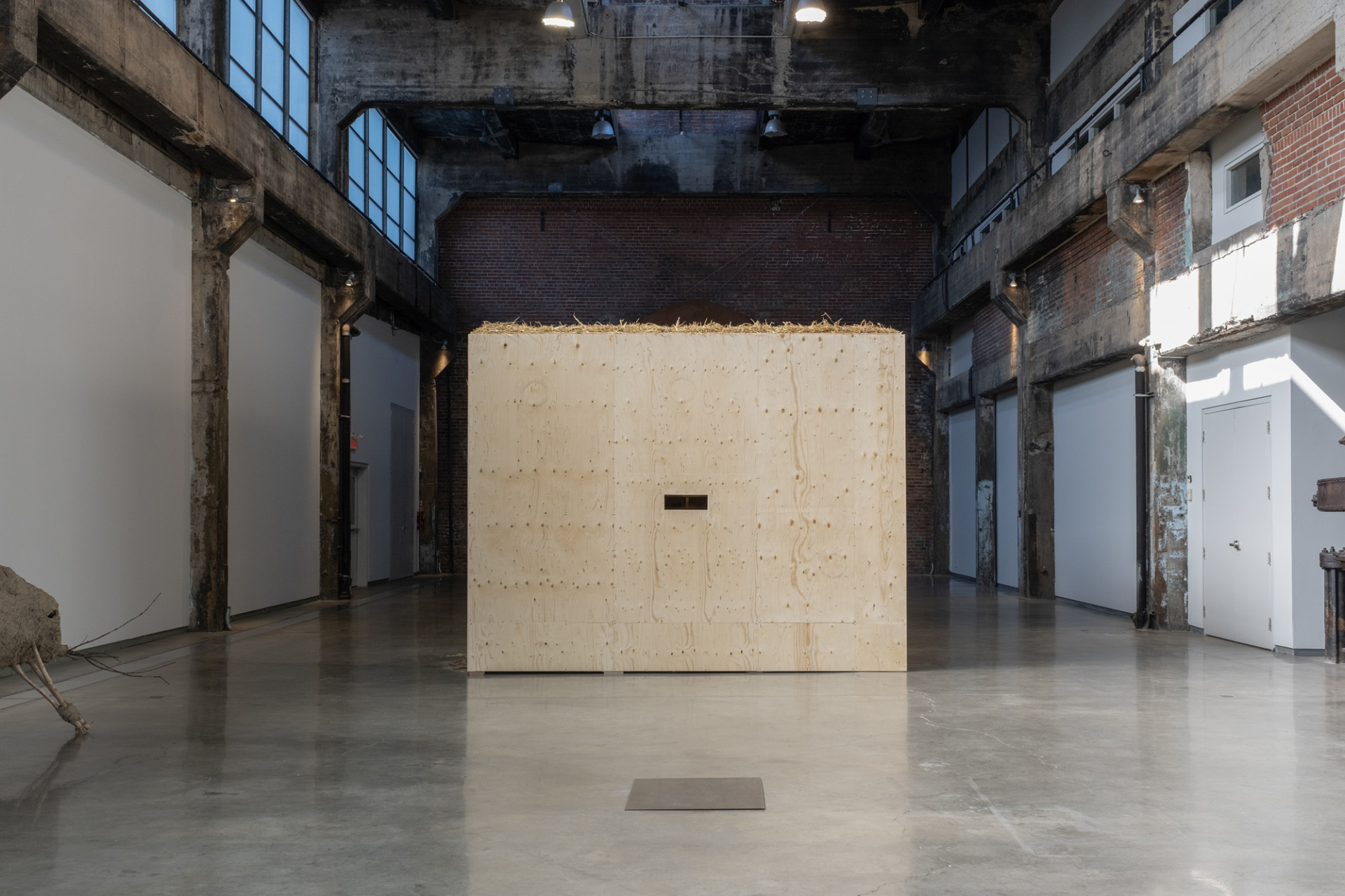
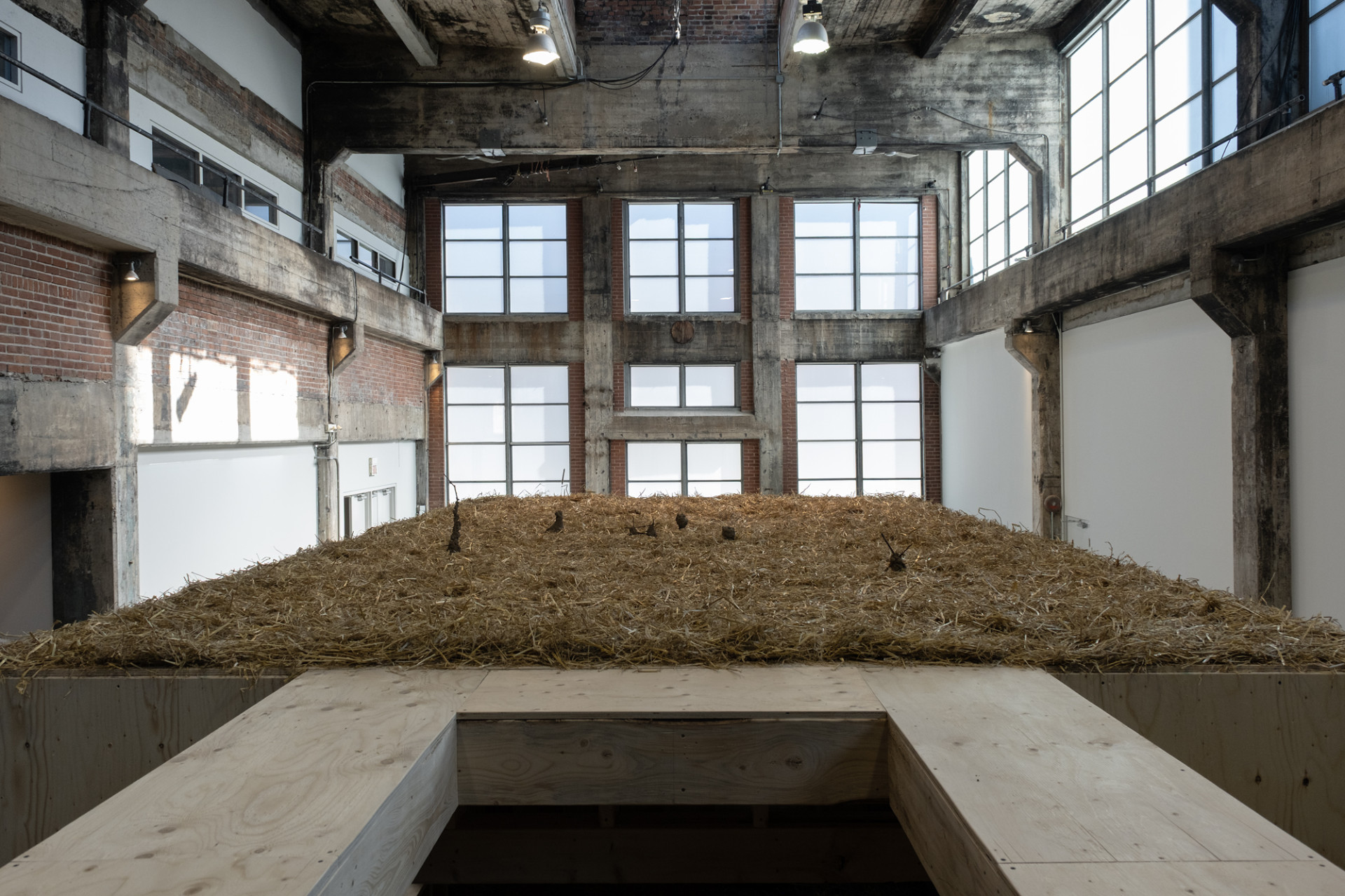
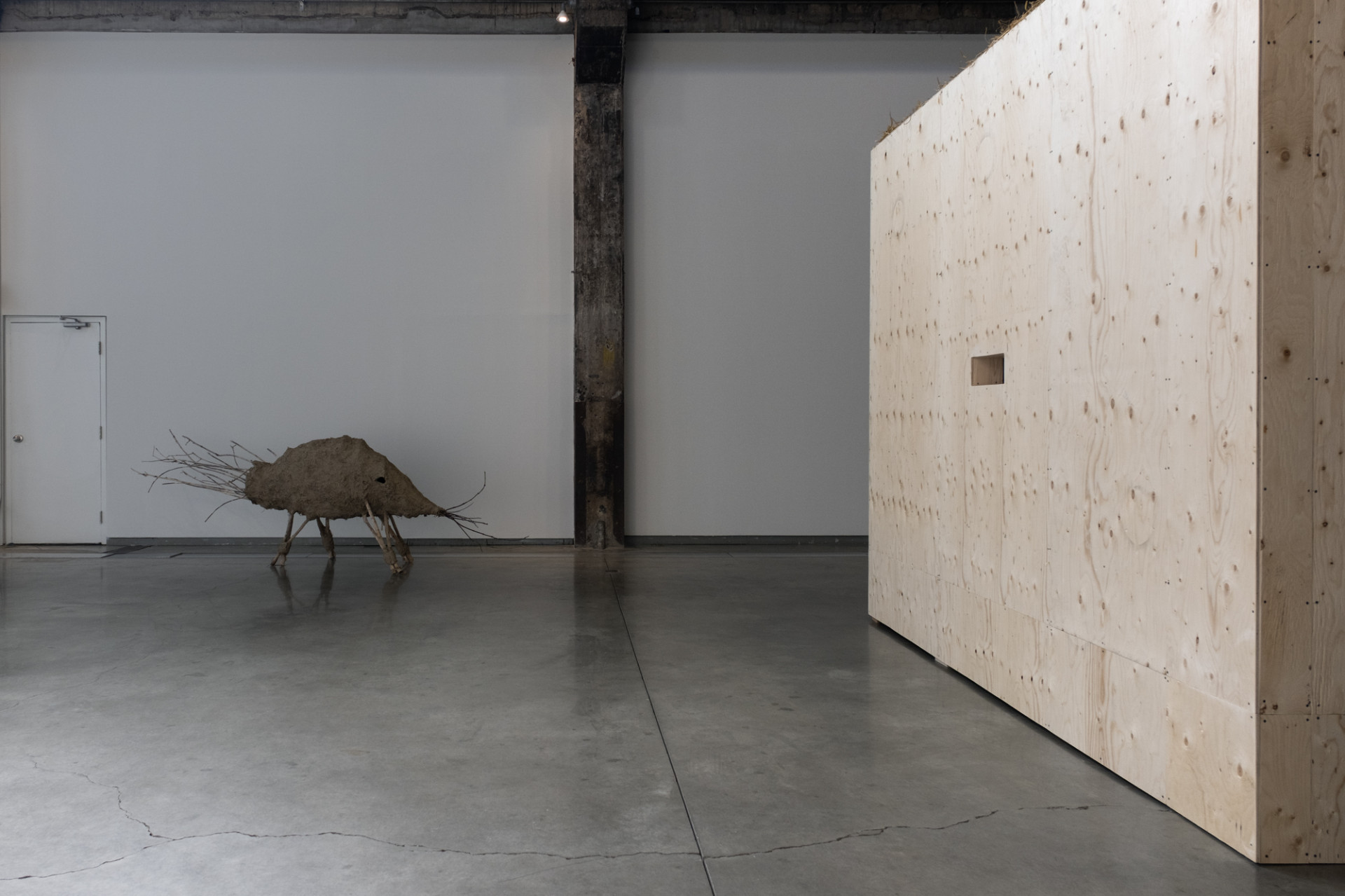
Deeply engaged in reflecting on ecology, community, and spirituality for over thirty years, Varady-Szabo has been embodying a way of life that puts him in contact with systems of life, instinctive architecture, and the interdependence between species and their environments. For this major exhibition in his career, he occupies a space of this scale for the first time with a series of imposing minimalist forms. Created from organic materials including wood, earth, branches, straw, and plants, this monumental installation draws inspiration from key techniques used in traditional architecture, such as cob or rammed earth.
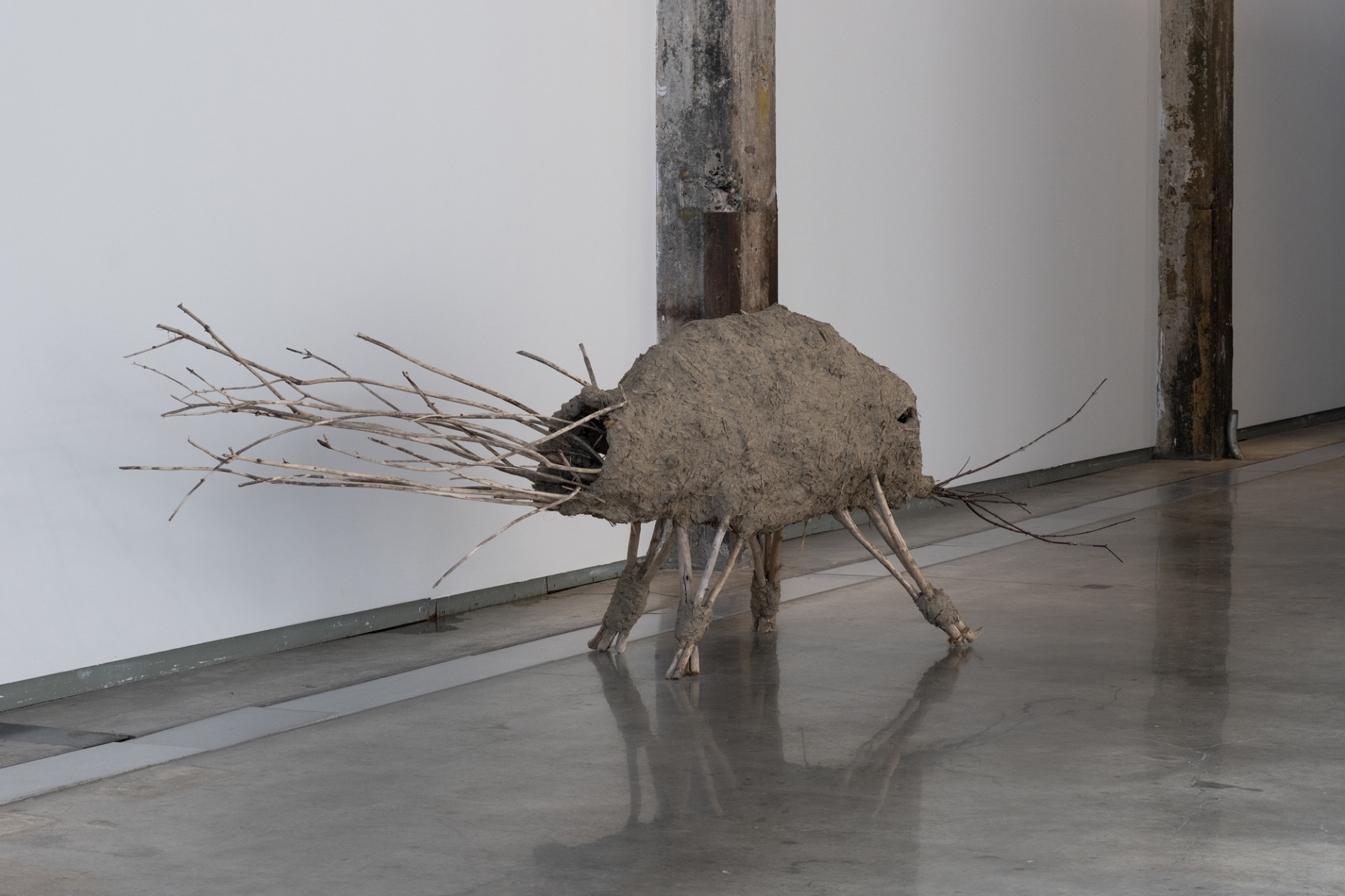
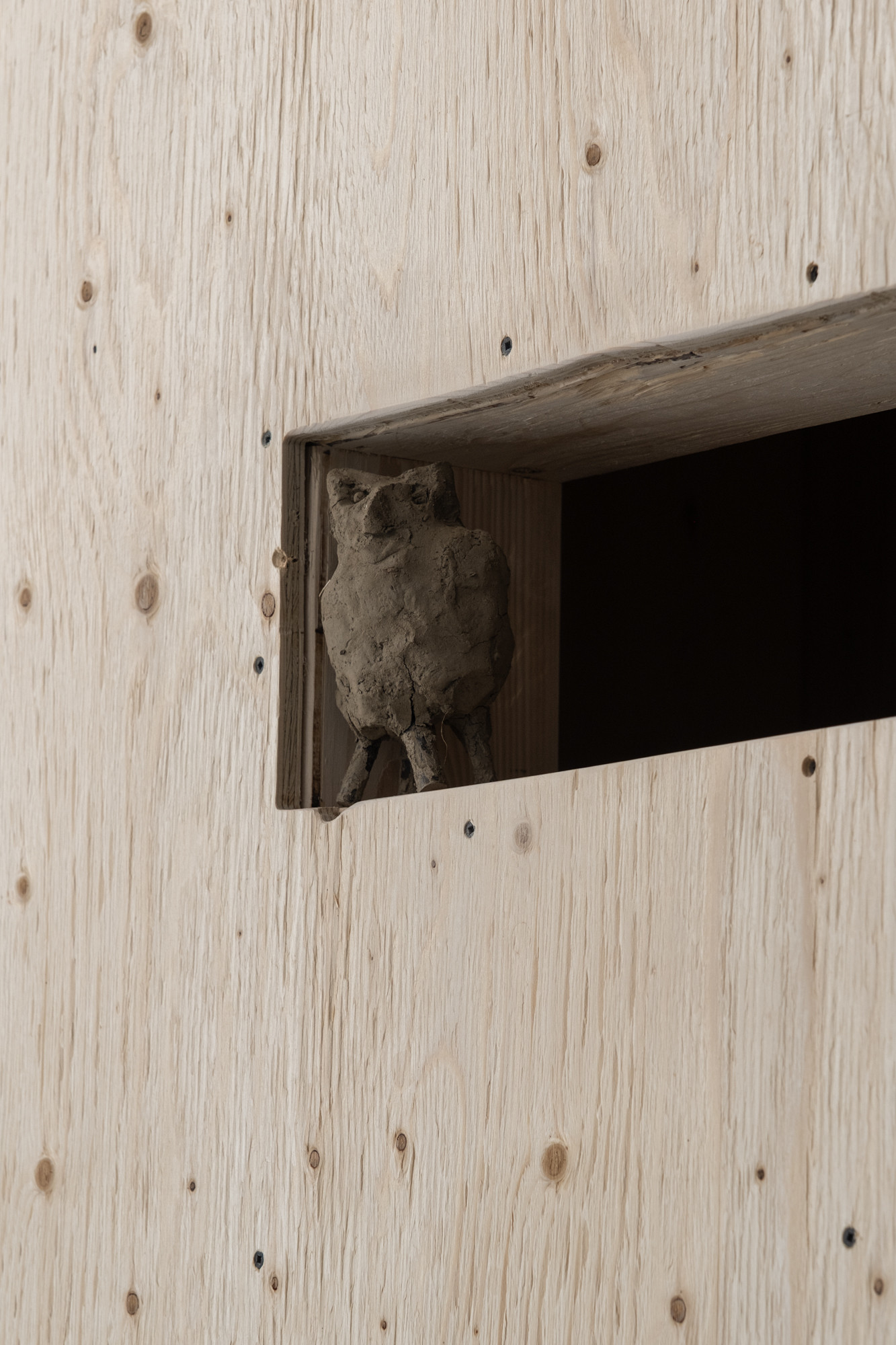
From a young age, Varady-Szabo developed a curiosity for architectural systems as he came into contact with certain building techniques in Australia and experienced the back-to-the-land movement, a global phenomenon in the 1970s that led to the exodus of thousands of city dwellers to the countryside. For him, these utopian visions enabled a way of being in the world in much greater harmony with all human and non-human beings. Early on in his art practice, raw earth became the material of choice for concretizing the connection between real life and ideas conveyed by art and for imagining hybrid creatures and the spaces that shelter them.
By combining modern, traditional, and ecological construction techniques in a highly personal language, Varady-Szabo reactivates what he calls a “primary space”—an instinctive way of being, freed from complex technological processes, which allows one to reconnect with the essential sensations of life, plants, insects, and animals. Animals are in fact a great source of inspiration for him. Long before human beings, frogs in Brazil, crabs in Australia, beavers in Canada, and termites in Senegal were ingeniously and instinctively building shelters with land materials.
Earth transforms as it comes into contact with water; liquid strengthens the cohesiveness of clay by increasing the interactions between its particles. This is why as material, mud has enormous creative and technical potential while also remaining highly accessible. For over 10 000 years, the skilful mix of earth and water has made possible monumental constructions and has been used by many cultures to build structures to serve as houses, gathering spaces, and places of worship. Although we associate raw earth with the past, the last two decades have seen a real renaissance of raw earth architecture, driven by an international movement that combines a rediscovery of traditional know-how with technical innovation3. Centres like CRAterre or the “Frugalité heureuse et créative dans l’architecture et l’aménagement des territoires” movement, started in France in 2018, are examples of initiatives that emphasize raw earth to promote sober, sensible, and regenerative construction, grounded in local materials and the cycles of life.
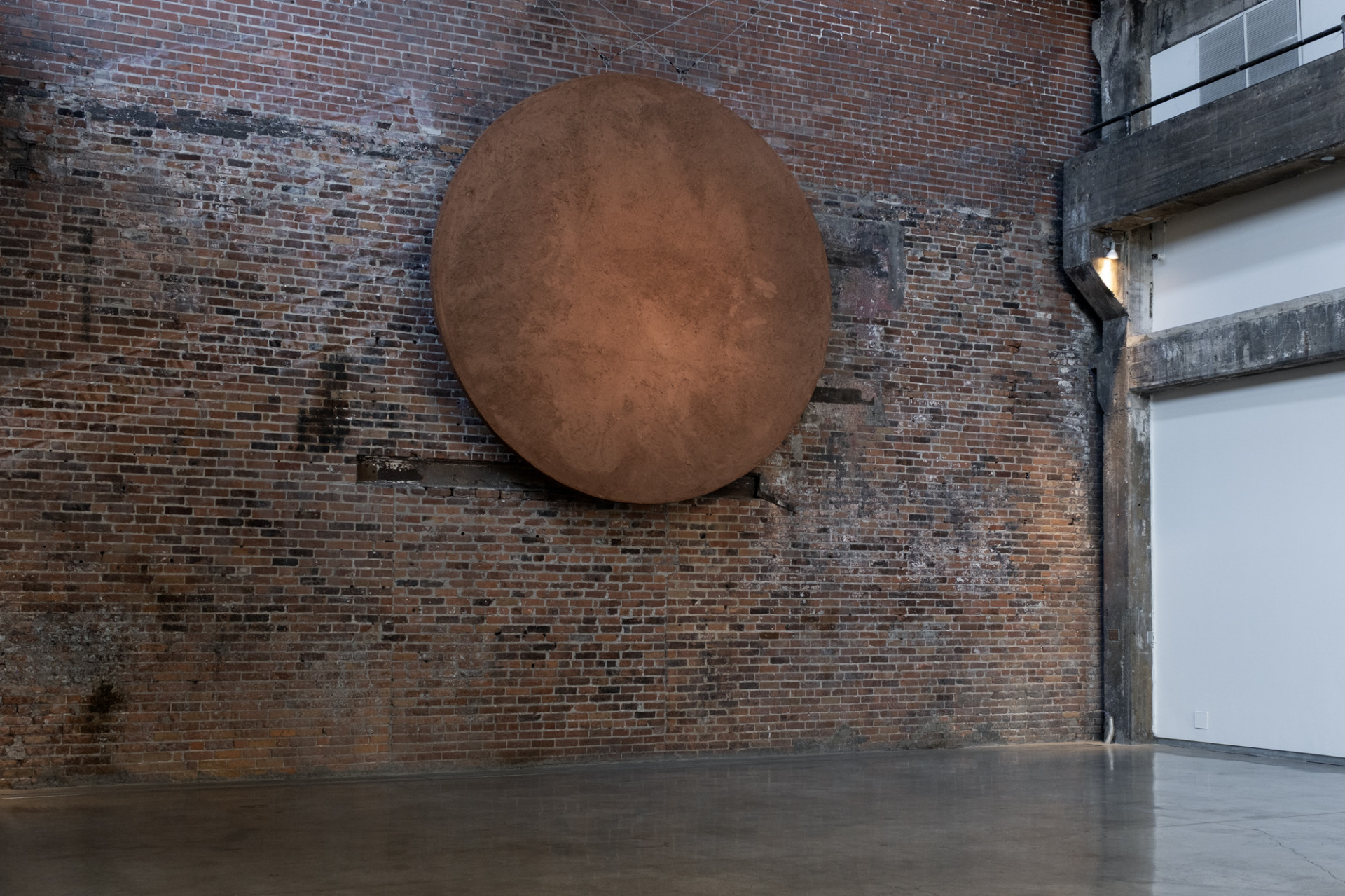
Even though these ideas have influenced Varady-Szabo indirectly, it is important to clarify that his art practice does not take an utilitarian architectural approach. Although inspired by natural habitats, the forms he creates remain ambiguous, comical, and are often drawn from a fantastical universe, at the intersection of material and imagination. In this particular case, Après la pluie, la boue suggests a dream that is not entirely happy; a story that leans towards a darker, even apocalyptic, vision of the future of the human species. As a whole, the installation and its inhabitants recall the shape of a vessel standing before an immense sun covered in mud. The association of these elements evokes the story of a great flood or points to the urgent need to evacuate Earth. Such scenes echo a very current and widespread feeling of climate anxiety and solastalgia, a term that refers to the deep pain experienced due to the tangible loss of our ecosystems. Whereas it has widely been proven that human activity has a devastating impact on the natural world, it seems impossible to slow this down. By focusing on mud, Varady-Szabo seems to suggest that it is essentially all we have left, and that the high potential of this plain material offers a possible solution to ensure our survival and imagine ways of living in the world that places all lifeforms at the centre of our lives.
Milly A. Dery
1 Ariane Wilson, “Half a Century of Evolution: 1970–2020,” in The Art of Earth Architecture, ed. Jean Dethier (Princeton Architectural Press, 2020), 363.
2 Notable examples include Enkidu in Mesopotamian mythology, the Golem in the Jewish folk tradition, Adam in the biblical tradition, Pandora in Greek mythology, or, in more contemporary times, Clayface in the Batman universe.
3 A few decades ago already, the exhibitions Architecture Without Architects at MoMA (1964) and Des architectures de terre at the Centre Pompidou (1981) showed the beauty and ingenuity of this ancient knowledge, inspiring amazement and fueling a renewed and considerable interest in the collective imagination for an architecture that is both ancestral and resolutely contemporary.
Translation by Oana Avasilichioaei and funded by the Government of Canada

Christopher Varady-Szabo
Originally from Sydney, Australia, Christopher Varady-Szabo has lived in Gaspé, Quebec for over forty years. After a year of studying architecture at the University of New South Wales, he changed direction to pursue a career as a visual artist. He completed a B.A. in Fine Arts in 1990 at the University of Quebec in Montreal and an M.A. in Visual Arts at the University of Ottawa in 2013. He is actively involved in the artist-run center Vaste et Vague in Carleton sur Mer. His work has been shown in Quebec, Ontario, Saskatchewan, New Brunswick, Switzerland, Finland, France, Belgium and Poland. He has produced several public works and his practice is supported by the Canada Council for the Arts and the Conseil des arts et des lettres du Québec.